Toronto, ON (July 8, 2026) — The Centre for Addiction and Mental Health (CAMH) is supporting the implementation of Ontario’s publicly funded repetitive transcranial magnetic stimulation (rTMS) program, helping advance a more integrated mental health system and improve access to this evidence-based, non-invasive treatment for adults living with treatment-resistant depression. The expansion will help integrate rTMS into standard care for adults whose depression has not improved with antidepressant medications or psychotherapy.
The publicly funded rTMS program is now available thanks to a recent $5.4 million provincial expansion investment, with approximately $1.3 million allocated to CAMH. This funding supports 18 rTMS devices at 15 sites across Ontario, helping up to 2,250 people living with treatment-resistant depression access care each year.
As part of the rollout, CAMH will deliver and oversee rTMS service in the Toronto Region, alongside regional delivery sites—St. Michael’s Hospital, a site of Unity Health Toronto, University Health Network (UHN), and Sunnybrook Health Sciences Centre—to improve access to standardized care. CAMH will also provide provincial clinical training and implementation support for all publicly funded rTMS providers in the province.
Depression is one of the most common mental illnesses, affecting about seven per cent of the population. In Ontario, at least one in five people with major depression have treatment-resistant depression, meaning their symptoms do not adequately improve despite trying standard treatments such as antidepressant medications or psychotherapy. rTMS is a Health Canada–approved, non-invasive brain stimulation treatment for adults with depression. It uses focused magnetic fields to stimulate specific areas of the brain involved in mood regulation.
For many people, rTMS can be life-changing. Research shows that about 50 per cent of patients experience a meaningful improvement in symptoms, with up to 30 per cent achieving remission, meaning their symptoms are largely resolved. Because rTMS is non-invasive and generally well tolerated, it may offer some patients an effective treatment option before considering more intensive interventions such as Electroconvulsive Therapy (ECT).
“For more than 20 years, I tried almost everything to manage my treatment-resistant depression. Medications, ECT, multiple hospitalizations. None of it reached what was underneath. I wanted the deep despair I felt to end, and for a long time I didn't know if that was even possible. rTMS was the treatment that finally gave me that relief,” says Shelley Roberts, CAMH Patient and Foundation Ambassador. “It gave me my life back, and it gave me a plan for staying well. CAMH is a save your life hospital, and I am so grateful for the gift they have given me. Now, I hope to help others across Ontario find that same relief, faster than I did.”
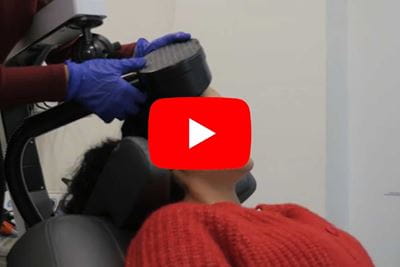
During treatment, patients remain awake while magnetic pulses are delivered to targeted areas of the brain through a device placed against the scalp. Sessions are typically completed in under 30 minutes, and most patients can return to daily activities immediately afterward. Patients are referred for treatment by a physician, nurse practitioner or psychiatrist and must meet established eligibility criteria. A typical course of treatment involves five sessions per week over six weeks, for a total of 30 sessions, although faster approaches are being studied in research settings.
“Offering rTMS more broadly across Ontario reflects years of collaboration, innovation, and a shared commitment to improving care for patients with depression and will allow many more people to access a treatment that is safe, effective, and grounded in decades of neuroscience research,” says Dr. Daniel Blumberger, Scientific Director of the Temerty Centre for Therapeutic Brain Intervention, CAMH. He is also the Provincial Clinical Lead, Neurostimulation Procedures Program, Mental Health and Addictions Centre of Excellence, Ontario Health, a role which has oversight to the provincial program.
While rTMS is supported by decades of research and clinical evidence, access in Ontario has historically been limited—often available only through participation in research studies or a small number of specialized hospital programs, including at CAMH. Through the Temerty Centre for Therapeutic Brain Intervention, CAMH has provided rTMS treatment to thousands of patients while helping advance the science and clinical use of brain stimulation therapies for depression and other mental illnesses. CAMH experts have also contributed to landmark clinical trials, international practice guidelines, and provincial standards for rTMS delivery, helping support safe, consistent care across Ontario.
To learn more about access to rTMS treatment at CAMH or in the Toronto Region, visit www.camh.ca/rtms
To learn more about research into rTMS and other brain stimulation therapies, visit: Temerty Centre for Therapeutic Brain Intervention
To learn more about Ontario’s new publicly funded Repetitive Transcranial Magnetic Stimulation (rTMS) program, visit: Depression and Anxiety-Related Concerns – Neurostimulation Procedures Provincial Program | Ontario Health
Quotes:
“This is a clear example of how research translates into real-world system change. CAMH’s role has been to help build the evidence, train the workforce, and work alongside Ontario Health and the Ministry of Health to embed rTMS into the broader mental health system. CAMH is proud to have helped change lives across Ontario, and we will keep doing this work so more people can find hope and feel better.”
— Sarah Downey, President and CEO of CAMH
“Under the leadership of Premier Ford, our government is taking bold and innovative action to strengthen Ontario's mental healthcare system. Our province-wide expansion of rTMS will ensure thousands of patients experiencing treatment-resistant depression can get the care they need, where and when they need it.”
— Sylvia Jones, Deputy Premier and Minister of Health
“This announcement reflects years of dedication and leadership from researchers, clinicians, patient advocates and donors who believed in the potential of this work from the beginning. Donor support helped establish and grow the Temerty Centre for Therapeutic Brain Intervention, building the research, clinical expertise and evidence that supported Ontario’s expansion of rTMS care. This is what is possible when people invest in CAMH’s ability to turn research into real-world care and better outcomes for more people across the province.
— Anne-Marie Newton, President and CEO of CAMH Foundation
-30-
About the Centre for Addiction and Mental Health (CAMH)
The Centre for Addiction and Mental Health (CAMH) is Canada's largest mental health and addiction teaching hospital and a world leading research centre in this field. CAMH combines clinical care, research, education, policy development and health promotion to help transform the lives of people affected by mental illness and addiction. CAMH is fully affiliated with the University of Toronto and is a Pan American Health Organization/World Health Organization Collaborating Centre. For more information, please visit camh.ca or follow @CAMHnews on Bluesky and LinkedIn.
Media Contacts:
CAMH Communications
media@camh.ca